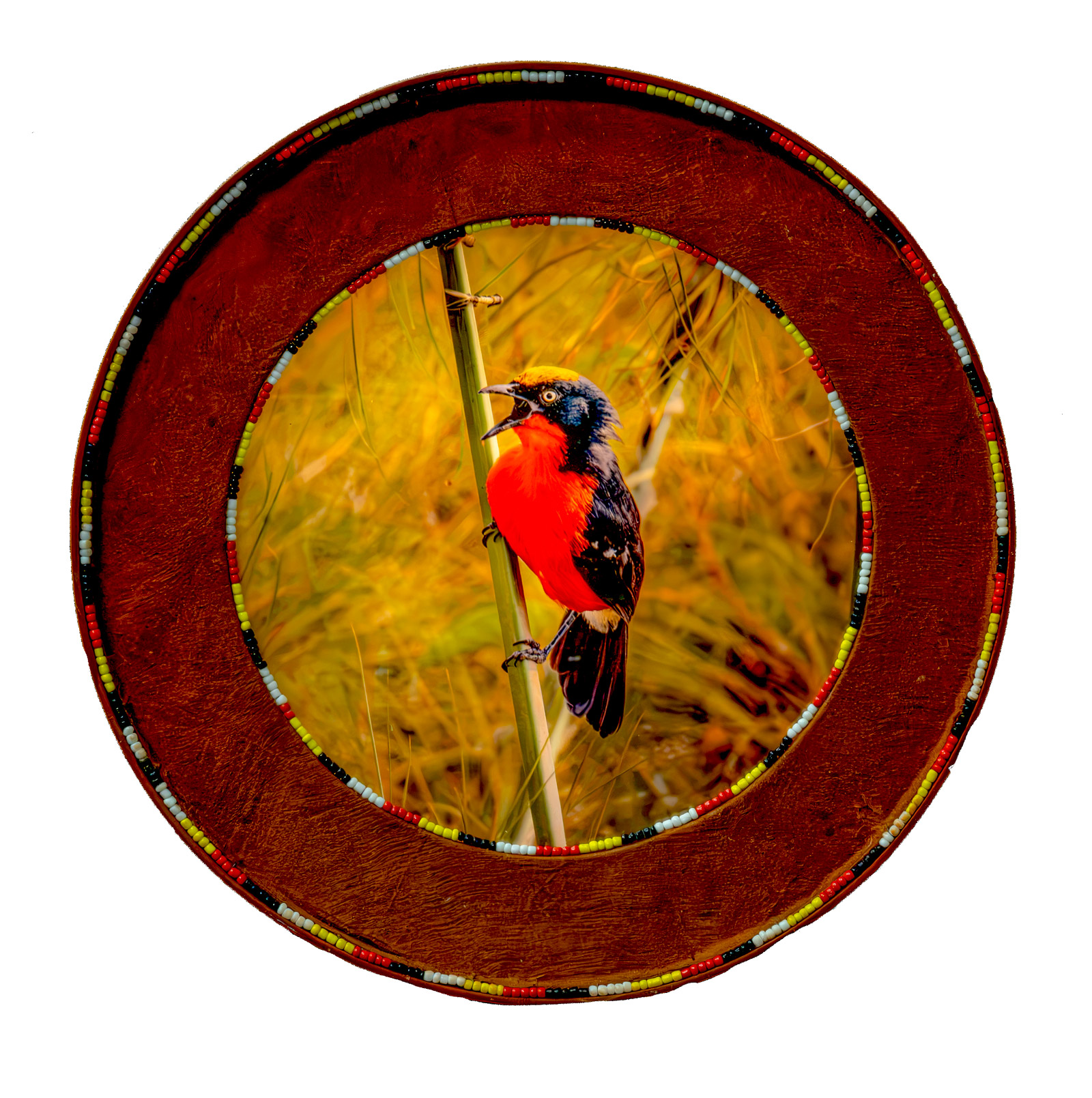
Scheflen’s newest illuminated sculptures continue his exploration of photography, sculpture, and handcrafted materials, bringing together images of birds photographed in Colombia with carefully constructed sculptural forms. Each piece is individually designed and hand-built using cardboard, recycled tree bark from Uganda, beads from Kenya, and other tactile elements selected to complement the backlighting provided by LCD lights illuminating the color transparencies embedded within. The transparencies feature birds photographed across Colombia’s diverse landscapes, from the high Andean mountains and cloud forests to tropical habitats. Suspended within the sculptural forms, the photographs create a sense of depth and movement, allowing each bird to become the focal point of the work. Together, the organic textures, handcrafted construction, and photographic transparencies reflect Scheflen’s continuing interest in the relationship between art and the natural world. The sculptural forms extend the photographs beyond the traditional frame, transforming them into dimensional portraits of Colombia’s remarkable birdlife. Through these works, Scheflen brings together his passion for photography, craftsmanship, birds, and environmental awareness. Each sculpture serves as both a portrait of a particular species and a celebration of Colombia’s extraordinary biodiversity, inviting viewers to experience wildlife through image, texture, and form.
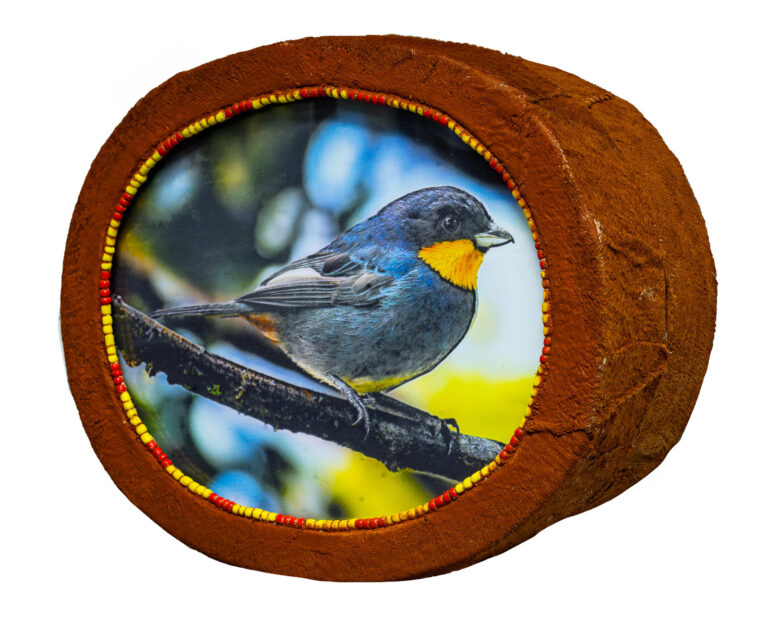
Lightsculpture made of cardboard, recycled tree bark and beads. Color transparency of a Purplish-mantled Tanager also known as the Blue-yellow Tanager (endangered), PNN Tatamá--Camino Montezuma, Colombia 2026.
Size - 10" W x 8" H x 4" D
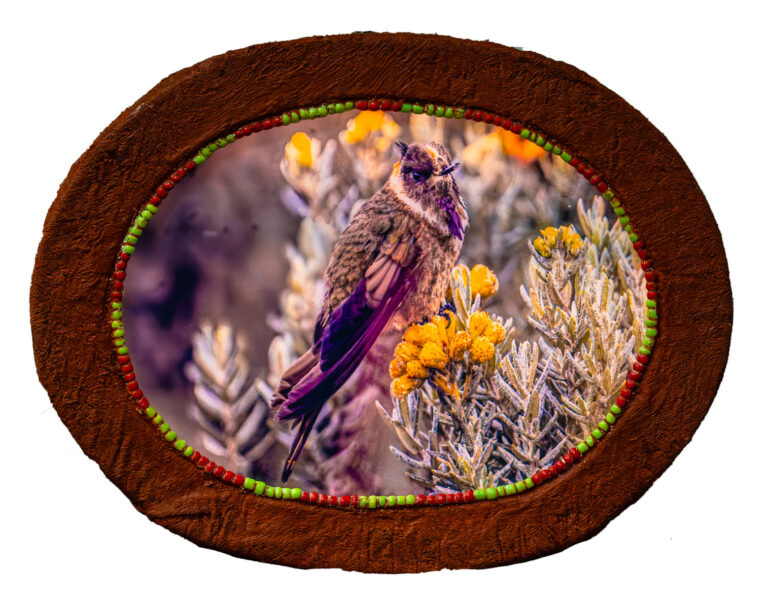
Made of cardboard, recycled tree bark and beads. A backlit color transparency image Buffy Helmetcrest hummingbird
(photo 14,000 ft.) PNN Los Nevados - Centro de Visitantes Brisas, Colombia, 2026
Size - 9.5"W x 7"H x 4" D
Buffy Helmetcrest hummingbird is a very rare, vulerable species endemic high altitude (11,000-13,000 ft.) of the Central Andes with only about 1000 spiecies left.
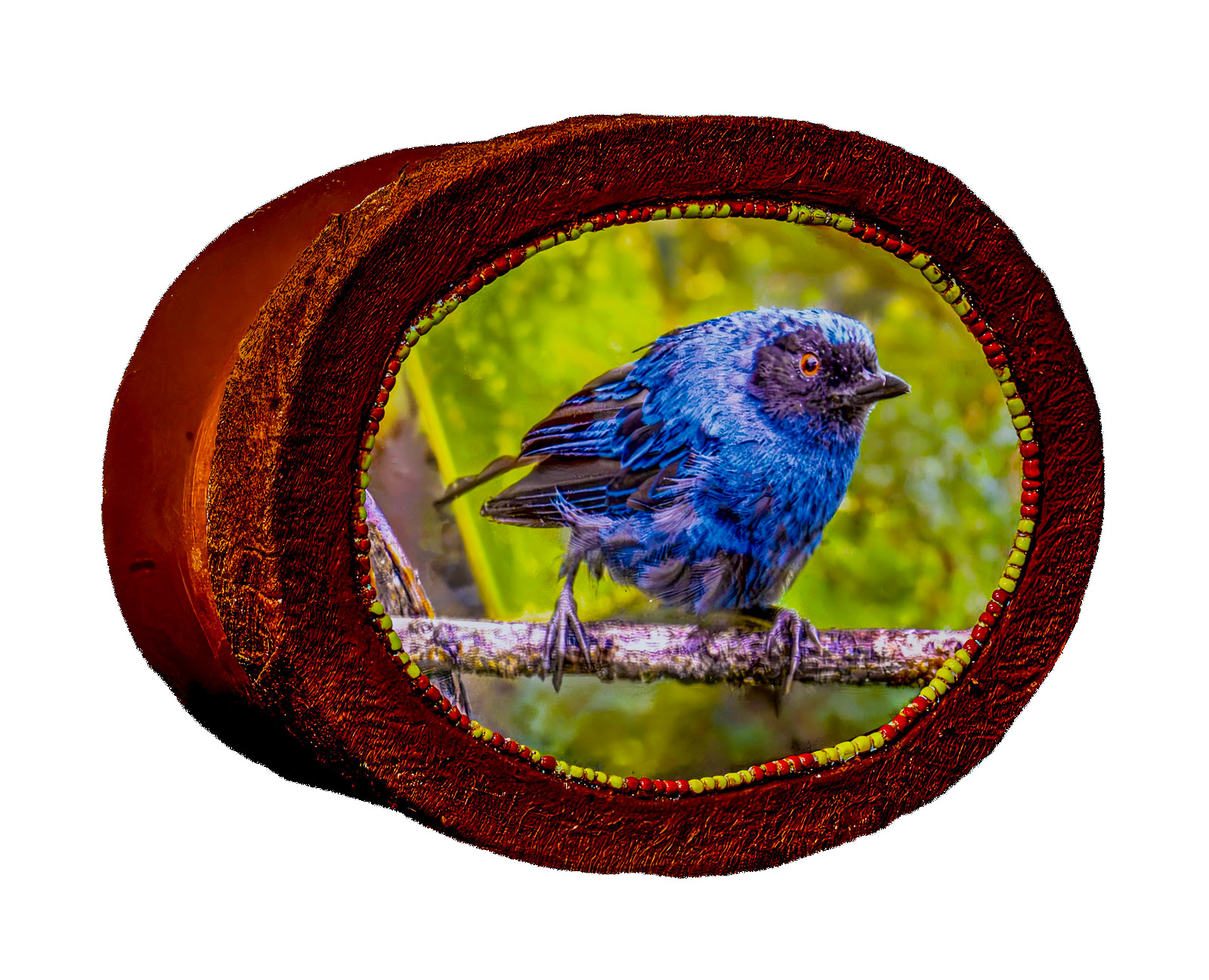
Lightsculpture made of cardboard, recycled tree bark and beads. Color transparency of a Masked Flowerpiercer lives about 6500 ft. high Andes, PNN Tatamá--Camino Montezuma, Colombia 2026, Size - 9"W x 6.6"H x 4"D
Scheflen began creating illuminated photographic sculptures and light boxes not only as an artistic exploration but also as a practical response to the challenges of exhibiting unconventional, large-scale installations. Finding galleries willing to present work that merged with photography, sculpture, sound, and environmental design was often difficult. By creating self-illuminated artworks, Scheflen developed a way to exhibit his pieces in spaces where traditional gallery lighting was unavailable or insufficient, allowing the work to be experienced as originally intended.
Each light sculpture was designed and hand-built by Scheflen using indigenous and locally sourced materials selected to harmonize with the transparent photographic images within. The materials, structure, and illumination were carefully integrated so that each piece reflected the cultural, environmental, and geographic context of its subject. The result was an immersive form of storytelling where photography extended beyond the frame and became a sculptural experience connecting people, place, and the natural world.
Equally important, Scheflen wanted his work to reach a broader audience and engage in a diverse cross-section of cultures, ages, and backgrounds. He believed that art addressing wildlife, conservation, and humanity’s relationship with nature should not be confined to traditional gallery spaces or limited to those who regularly visit museums. By exhibiting in public venues, community spaces, churches, schools, and transportation centers, he brought these ideas directly into everyday environments, engaging thousands of people who might never encounter such work otherwise. The illuminated sculptures transformed ordinary public spaces into places of reflection, discovery, and dialogue.
One notable example was Kiboko, a large-scale illuminated sculpture installed in the front yard of St. Mark’s Church-in-the-Bowery in New York City. The work was illuminated every night for more than two years, becoming a familiar presence for neighborhood residents, visitors, artists, and passersby. More than a public artwork, Kiboko became a symbol of support for environmental stewardship, wildlife conservation, and the protection of endangered ecosystems. Its ongoing presence invited viewers to reflect on humanity’s connection to the natural world and the responsibility we share in protecting the planet’s fragile ecosystems.
The installation embodied Scheflen’s commitment to using art as a vehicle for conservation awareness, cultural exchange, and public engagement—bringing important environmental conversations beyond traditional exhibition spaces and into the heart of community life.
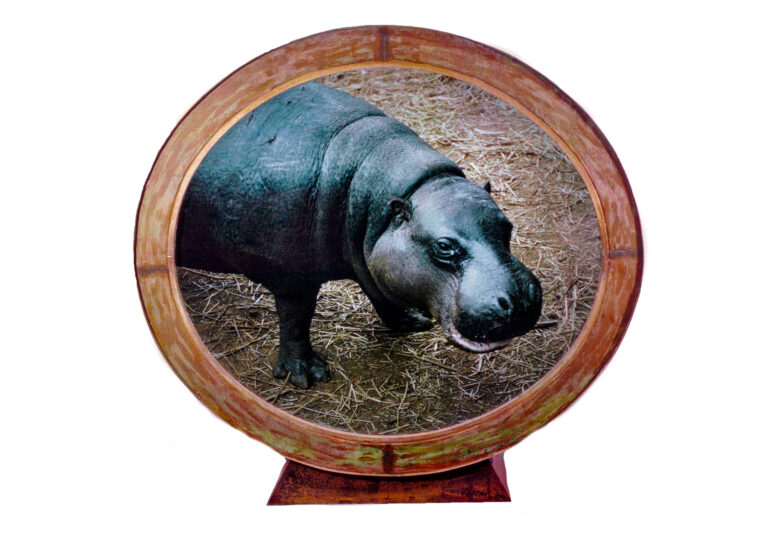
Kiboko light sculpture 55" x 60" x 16" made of steel and copper
Backlit transparencyPygmy Hippo created 1991
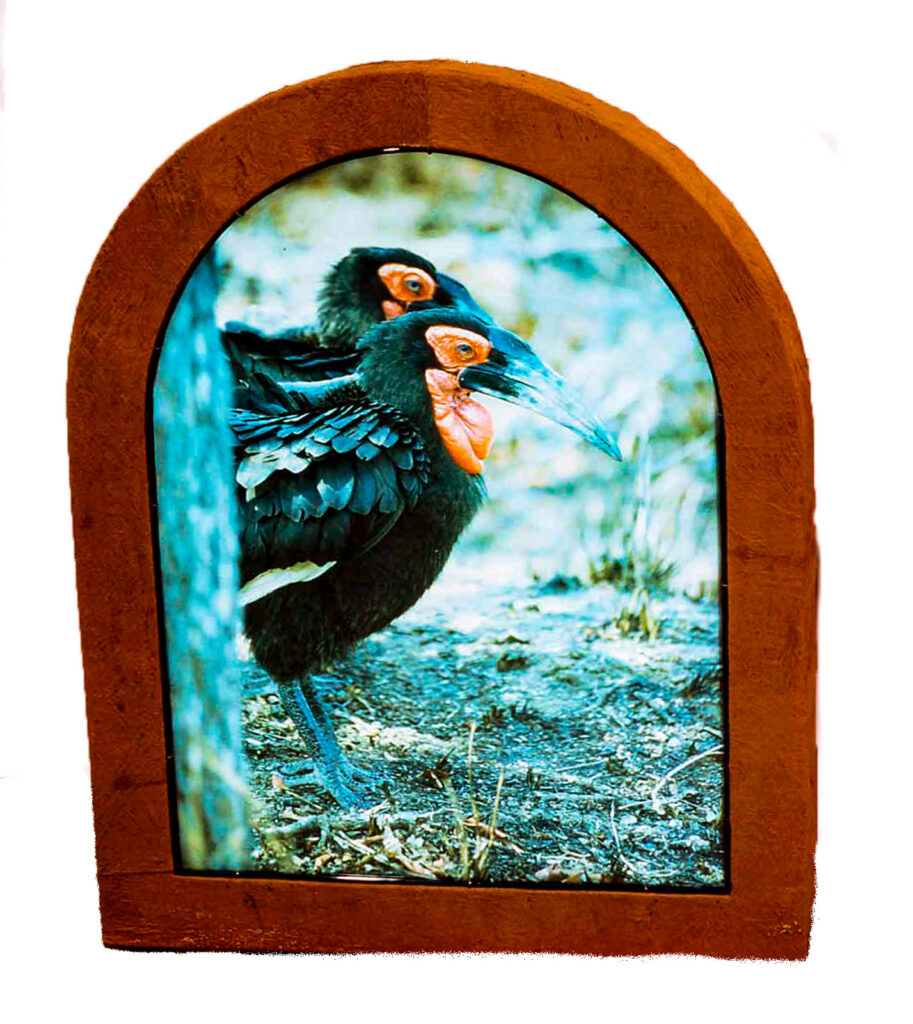
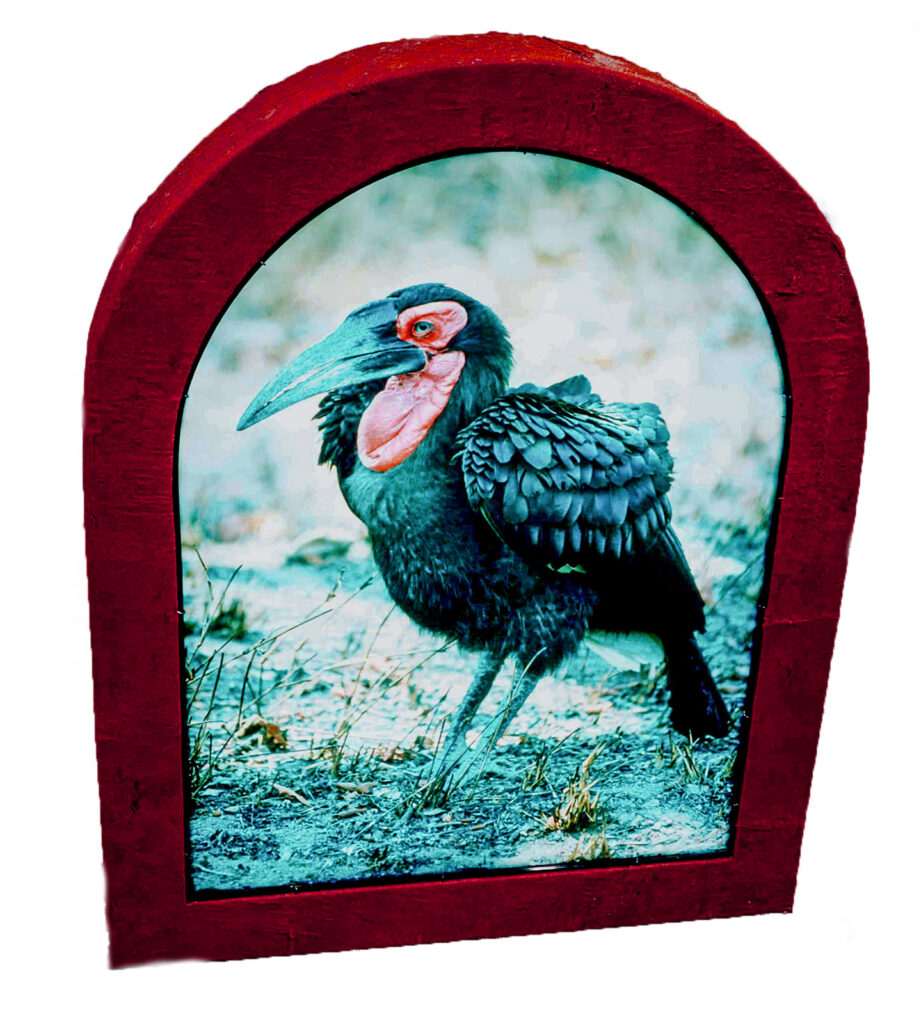
Light sculptures 24" x 20" x 4" tombstones, birch wood and tree bark. Backlit transparencies, Ground Hornbills, Serengeti Plains, Tanzania 1991
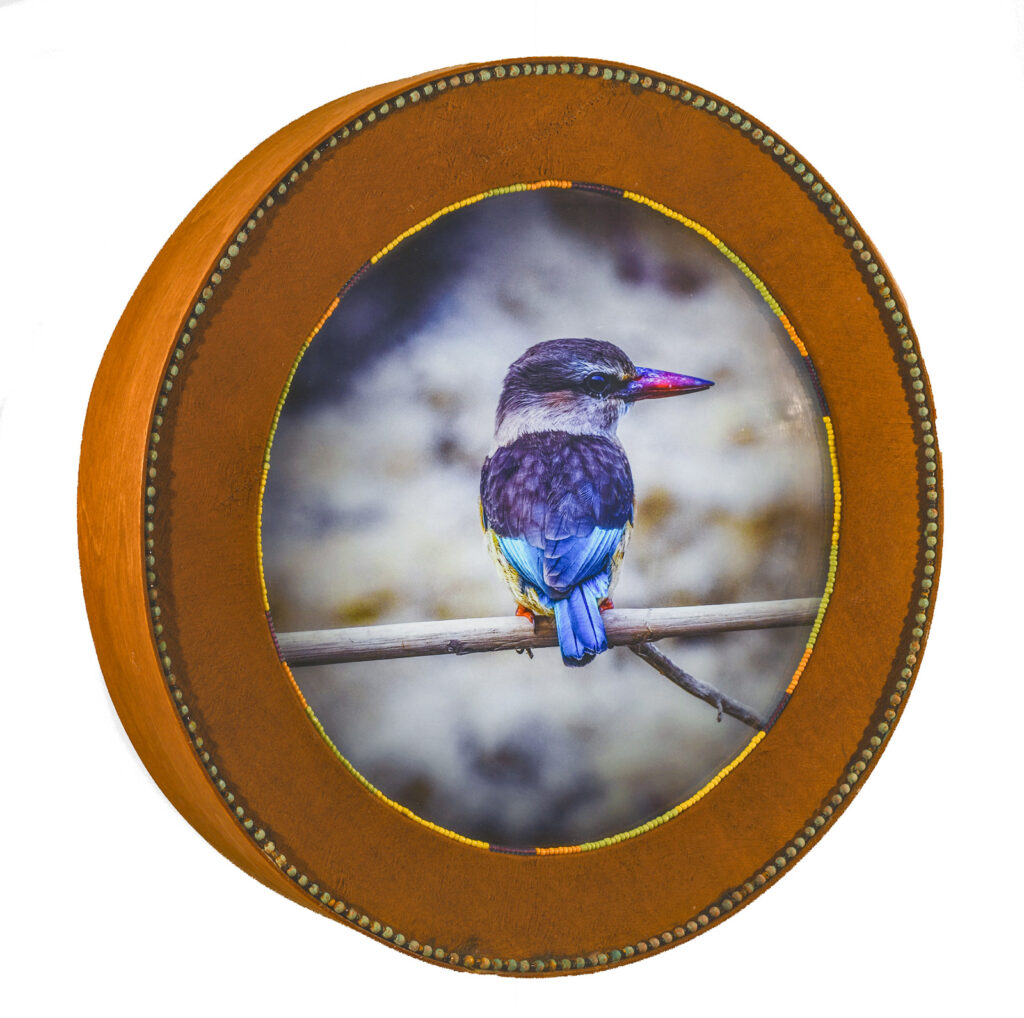
Light sculpture 16" x 16" x 5" birch wood, tree bark and beads, backlit transparency
Brown-hooded Kingfisher, Serengti Plains, Tanzania 2024
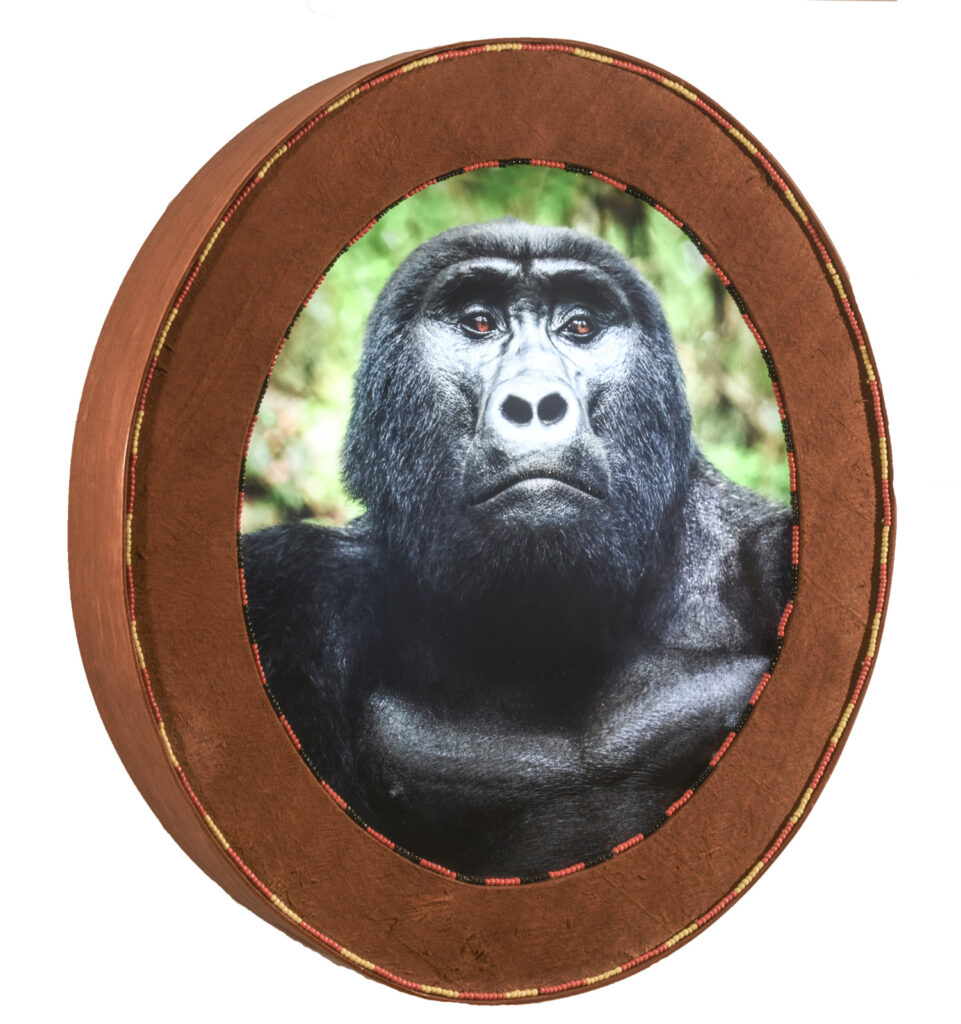
Light sculpture 24" x 24" x 5" tree bark, birch wood, and beads. Backlit transparency Silverback Gorilla, Bwindi Impenetrable Forest, Uganda 2004
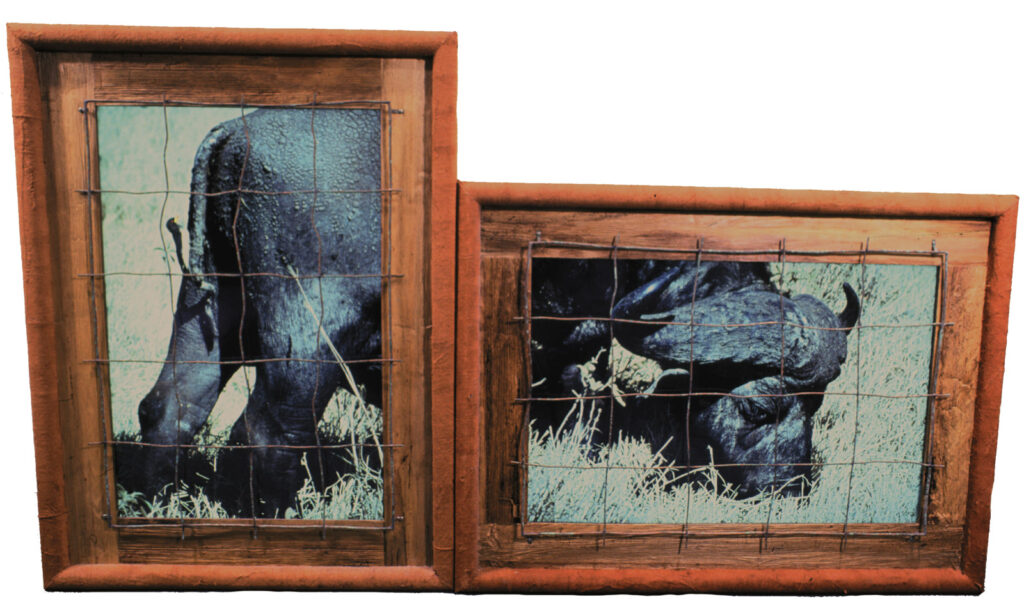
Light sculptures (2) 54" x 36" x 6" banana leaves, recycled tree bark and cooper wire.
Backlit transparencies Cape Buffalo, Maasi Mara National Park, Kenya 1991
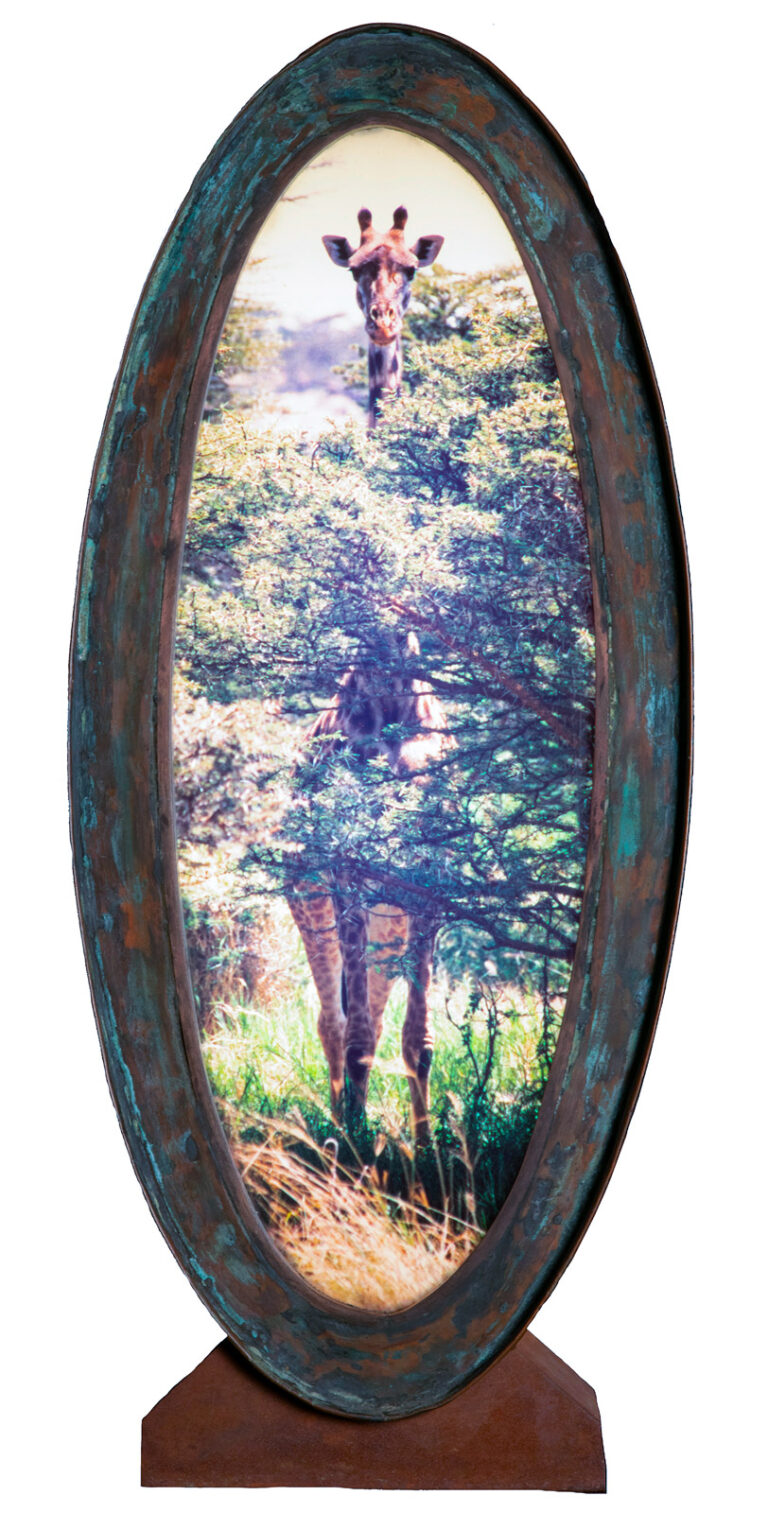
Light sculpture 14" x 6" x 3" copper and steel
Backlit transparency Giraffe, Serengeti Plains, Tanzania 1991
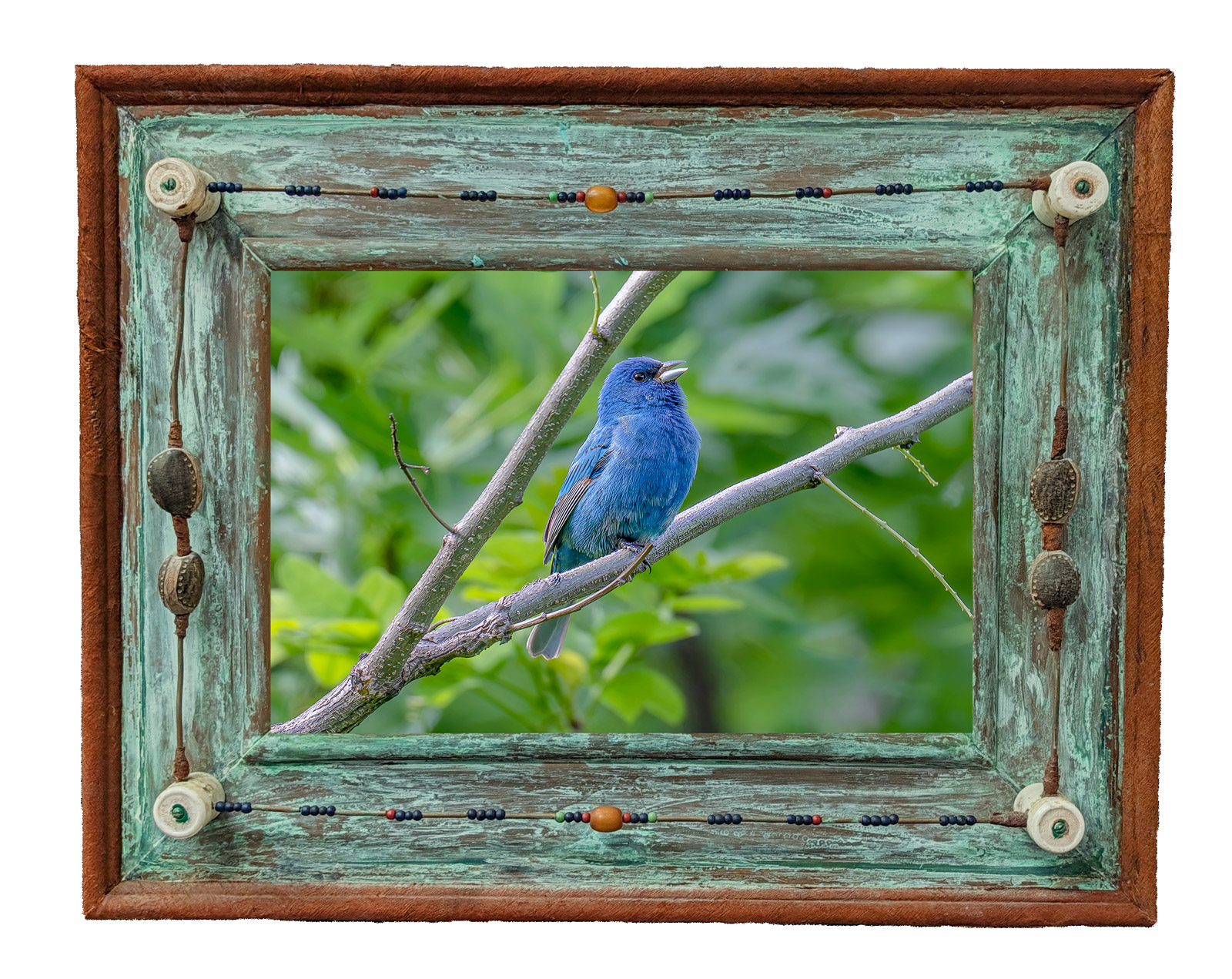
Crafted within a 1992 copper frame measuring 24" W x 20" H x 5" D, this environmental light sculpture features a backlit color transparency of a Intigo Bunting. The piece is textured with handmade tree bark, decorated seeds, beads, and amber sourced from Kenya. It incorporates vintage porcelain knobs—originally used in early residential knob-and-tube electrical systems—with copper wiring. This work was created as part of a dedicated series of public exhibitions featuring a collection of light sculptures exploring the intersection of people, wildlife and various environments.